Bio-Based Solvents in Cosmetics: Why DMI (Dimethyl Isosorbide) Outperforms Ethanol & Glycols
Reading time: 5 minutes | Category: Formulation Science
📌 Ready to take the next step?
🔗 Get detailed specs & pricing → DMI Product Page
🔗 See how to use it in real formulas → DMI Formulation Guide
The Formulator’s Dilemma
Every formulator faces a familiar challenge: How do you get active ingredients to penetrate deeply enough to work, without causing irritation?
- Ethanol works — but it stings, dries the skin, and damages the moisture barrier.
- Propylene glycol — too sticky, and limited penetration enhancement.
- Dimethyl sulfoxide (DMSO) — potent, but carries safety concerns.
Enter Dimethyl Isosorbide (DMI) — a high-purity, bio-based solvent that solves all three problems simultaneously.
What Is Dimethyl Isosorbide (DMI)?
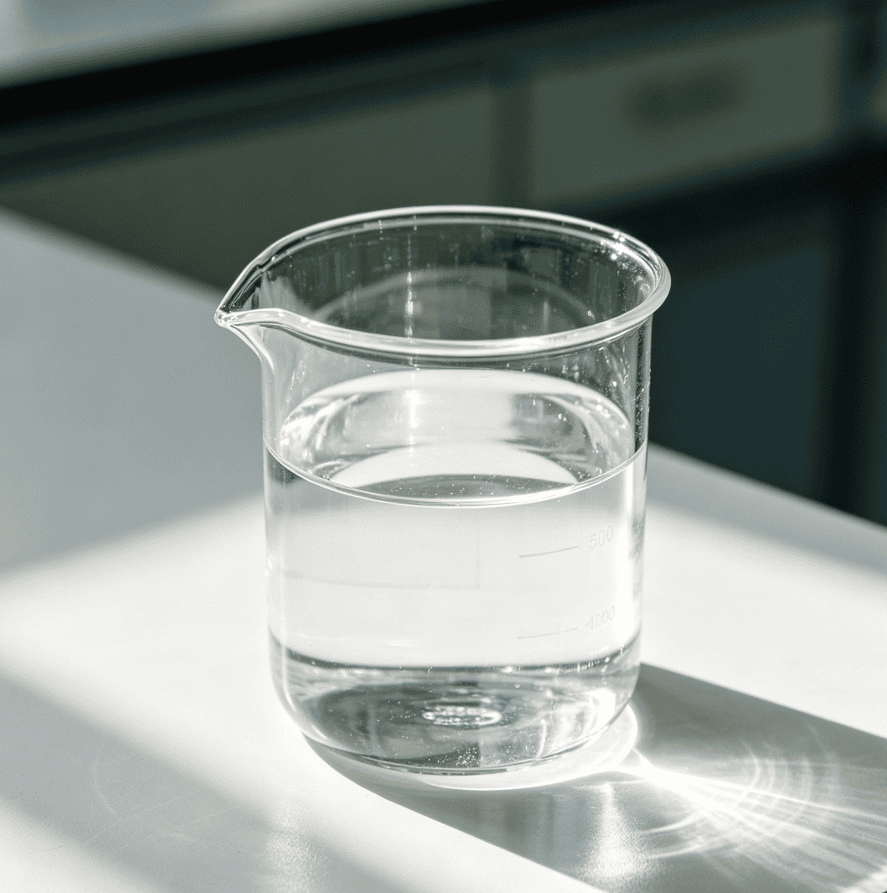
DMI (CAS: 5306-85-4) is a clear, colorless, water-miscible liquid derived from renewable plant starches (specifically from sorbitol , which comes from corn or wheat).
Chemically, it is a dimethyl ether derivative of isosorbide — a bicyclic diol produced from renewable resources. Its unique molecular structure gives it both polar and non-polar solvency, making it one of the most versatile cosmetic solvents available today.
INCI Name: Dimethyl Isosorbide
Other names: Isosorbide Dimethyl Ether, DMI, Arlasolve DMI
How DMI Works: The Science of Enhanced Delivery
Unlike ethanol, which disrupts the skin barrier aggressively, DMI works by modifying the intercellular lipid structure temporarily and reversibly.
Key mechanisms:
- Partitioning: DMI carries active ingredients into the stratum corneum (the outermost skin layer).
- Solubilization: It dissolves both hydrophilic and lipophilic compounds, preventing crystal formation.
- Non-damaging: At recommended concentrations, DMI does not cause barrier disruption or transepidermal water loss (TEWL).
In simple terms: DMI helps actives go in, keeps moisture from going out, and minimizes irritation.
Safety First: What the Data Says
Based on a comprehensive safety assessment report (Shanghai Weipu, April 2024; following SCCS guidelines) and NICNAS (Australian AICIS) evaluations:
:
| Toxicology Endpoint | Result |
|---|---|
| Acute oral toxicity (LD₅₀) | 5.63 mL/kg bw (Not classified) |
| Skin irritation (undiluted) | Non-irritating |
| Eye irritation (undiluted) | Non-irritating |
| Skin sensitization | Non-sensitizing (100% concentration) |
| Phototoxicity | Negative |
| Genetic toxicity (Ames test) | Negative (non-mutagenic) |
| Repeat dose toxicity (NOAEL) | 375 mg/kg bw/d |
| Margin of Safety (MoS) | > 100 (safe for topical use) |
Regulatory recognition:
- ✅ Listed in China IECIC (entry No. 07835) with maximum historical use of 10% in leave-on products. (entry No. 07835) with maximum historical use of 10% in leave-on products.
- NICNAS concluded: “The risk is acceptable up to 25% in personal care products when used as intended.”
- Not classified as CMR (carcinogenic, mutagenic, or reprotoxic).
DMI vs. Ethanol vs. Glycols: Head-to-Head
| Parameter | DMI | Ethanol | Propylene Glycol |
|---|---|---|---|
| Source | 🌱 Bio-based | ⛽ Petrochemical | ⛽ Petrochemical |
| Penetration enhancement | Strong (reversible) | Strong (aggressive) | Weak |
| Skin stinging | None | Significant | Mild |
| Barrier damage | No | Yes | Minimal |
| Sensory feel | Light, non-oily | Cooling (volatile) | Tacky, sticky |
| Solvency range | Broad (polar + non-polar) | Narrow (polar) | Moderate |
| Flash point | > 80°C (safe transport) | 13°C (flammable) | 99°C |
| Regulatory restrictions | None (global) | Restricted in high conc. | Restricted in EU leave-ons |
Verdict: DMI offers the penetration power of ethanol without the sting, and the solvency of glycols without the sticky feel.
Top Applications for DMI in Modern Formulations
1. Sunscreens (1% – 10%)
DMI solubilizes organic UV filters (like avobenzone, octinoxate) and improves SPF uniformity. It also reduces the greasy after-feel common in high-SPF formulas.
2. Retinoid / HPR / Anti-Aging Serums (3% – 10%)
Retinol is notoriously unstable and irritating. DMI stabilizes retinoids, improves dermal delivery, and significantly reduces peeling and redness.
3. Acne & Brightening Products (5% – 15%)
Salicylic acid, kojic acid, and tranexamic acid all benefit from DMI’s solubilizing and penetration-enhancing properties — with less stinging.
4. Depigmenting & Dark Spot Correctors
DMI helps hydroquinone alternatives (like alpha-arbutin, resveratrol, vitamin C derivatives) reach the basal layer where melanin is produced.
Sustainability: A Genuinely Green Alternative
Unlike petrochemical-derived solvents (ethanol, acetone, hexane), DMI is:
- Renewable: Derived from plant starches (corn, wheat, cassava)
- Biodegradable: Low environmental persistence
- Non-VOC: Safe for workers and the environment
- Low carbon footprint: Studies suggest bio-based solvents reduce GHG emissions by 40-70% compared to petrochemical alternatives.
As consumers demand greener beauty, switching to bio-based DMI is a credible, defensible sustainability claim.
Why Formulators Are Switching to DMI Now
| Old approach | New DMI approach |
|---|---|
| Use ethanol — irritation complaints | Use DMI — efficacy without the sting |
| Use multiple solvents to dissolve actives | One solvent (DMI) for most actives |
| High active concentration (more side effects) | Lower active + DMI (same efficacy, better tolerance) |
| Petroleum-based solvents (negative marketing) | Plant-based DMI (positive green story) |
Frequently Asked Questions (FAQ)
Q1: Is DMI a natural ingredient?
A: DMI is derived from plant starches (corn or wheat), making it a bio-based ingredient. However, it undergoes chemical conversion (methylation) to become Dimethyl Isosorbide. It is not “natural” in the strictest sense but is considered a renewable, green solvent.
Q2: Is DMI safe for sensitive skin?
A: Yes. DMI is classified as non-irritating and non-sensitizing based on toxicology studies (OECD guidelines). It is often used to reduce irritation from potent actives like retinol and salicylic acid.
Q3: Can DMI cause acne or breakouts?
A: No. DMI is non-comedogenic and non-irritating. In fact, it is used in acne treatments to enhance salicylic acid delivery while reducing stinging.
Q4: Is DMI vegan and cruelty-free?
A: Yes. DMI is synthesized from plant-based feedstocks, involves no animal-derived ingredients, and is not tested on animals unless required by regulation.
Q5: How does DMI compare to DMSO as a penetration enhancer?
A: DMI is significantly safer. DMSO can carry undesirable substances into the bloodstream and has odor issues. DMI is non-toxic, odorless, and specifically enhances dermal delivery without systemic absorption concerns.
Q6: Is DMI approved for use in the EU and US?
A: Yes. DMI is listed in the Chinese IECIC directory (No. 07835), approved by the US FDA as an inactive ingredient in topical pharmaceuticals (up to 15%), and has no restrictions in EU cosmetic regulations.
Q7: Can DMI be used in leave-on and rinse-off products?
A: Yes. DMI is suitable for both leave-on products (serums, creams, lotions, sunscreens) and rinse-off products (cleansers, shampoos, body washes) without any safety concerns.
Q8: What is the shelf life of DMI?
A: When stored properly (cool, dry, sealed container away from strong oxidizers), DMI has a shelf life of 24 months. Retesting after 12 months is recommended for quality assurance.
The Bottom Line
Dimethyl Isosorbide (DMI) is not just another solvent — it is a strategic formulation tool that bridges the gap between efficacy and gentleness.
- ✅ Higher active delivery
- ✅ Lower irritation
- ✅ Bio-based & sustainable
- ✅ Globally approved
Ready to Try DMI in Your Next Formula?
Contact us for DMI samples, COA, MSDS, TDS and further product details.
Email: sales@gzhuachem.com
WhatsApp/WeChat: +8615217471609/+8618565278805