The definitive resource on HPR chemistry, mechanism of action, and clinical evidence.
🔬 For formulation and purchasing: See our HPR Formulation Guide or Product Page.
1. What Is HPR? Definition & Chemical Identity
Hydroxypinacolone Retinoate (HPR) is an esterified derivative of retinoic acid, synthesized by the dehydration condensation of retinoic acid and pinacol. This unique molecular structure gives HPR its distinct properties within the retinoid family.
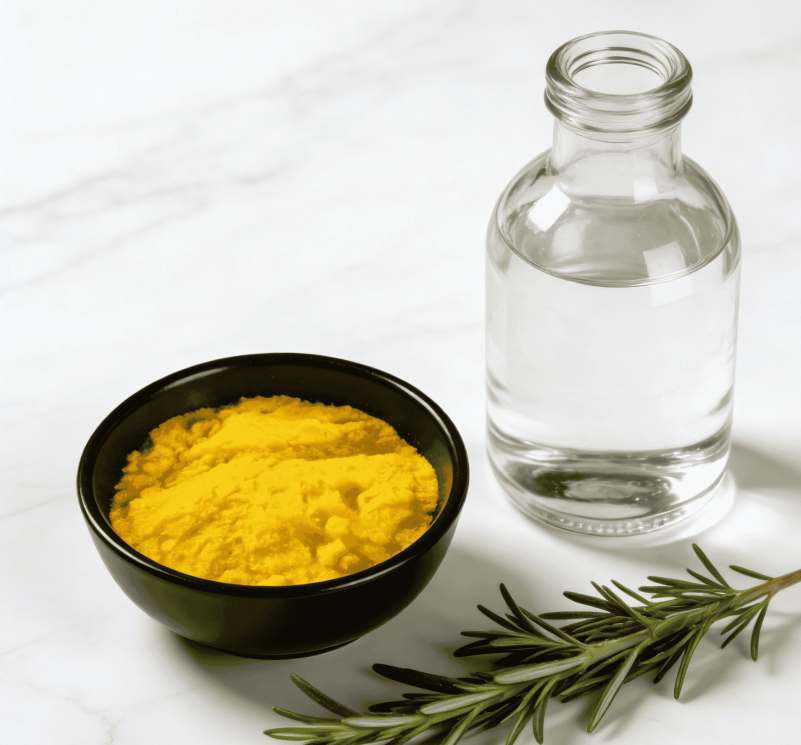
| INCI Name | Hydroxypinacolone Retinoate |
| CAS No. | 893412-73-2 |
| Molecular Formula | C₂₆H₃₈O₃ |
| Molecular Weight | 398.58 g/mol |
| Solubility | Oil-soluble (esters, triglycerides, DMI) |
Chemical Structure
HPR consists of the retinoic acid pharmacophore (the portion responsible for receptor binding) esterified with pinacol. This esterification:
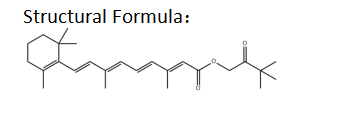
Provides steric stabilization against oxidation and degradation
Preserves the active retinoic acid backbone for receptor recognition
Confers enhanced lipophilicity for improved skin penetration
2. The Retinoid Family: Where HPR Fits
Vitamin A derivatives (retinoids) form a family of compounds with similar structure but different properties:
| Retinoid | Structure | Conversion Required | Primary Use |
|---|---|---|---|
| Retinyl esters | Retinol + fatty acid | 3-step (ester → retinol → retinal → retinoic acid) | Over-the-counter cosmetics |
| Retinol | C₂₀H₃₀O | 2-step (retinol → retinal → retinoic acid) | Over-the-counter cosmetics |
| Retinaldehyde | C₂₀H₂₈O | 1-step (retinal → retinoic acid) | Cosmetics, some OTC |
| HPR | Retinoic acid + pinacol | None – direct binding | Cosmetics |
| Retinoic acid | C₂₀H₂₈O₂ | None – direct binding | Prescription only |
Key insight: HPR is structurally closer to retinoic acid than to retinol, which explains its direct receptor activity. The pinacol ester group modulates its bioavailability and safety profile.
3. Discovery & Development History
HPR was developed in the early 2000s as a solution to a key problem in cosmetic retinoid formulation: how to deliver retinoic acid-like efficacy without prescription-level irritation.
- Pre-2000: Retinol and retinyl esters dominated the cosmetic retinoid market, but formulators struggled with stability and irritation.
- Early 2000s: Researchers at Estée Lauder and other major cosmetic companies began exploring retinoic acid esters as potential alternatives.
- Mid-2000s: HPR was patented and characterized. Key studies demonstrated its direct receptor binding and reduced irritation profile.
- Late 2000s – 2010s: HPR appeared in premium skincare products, including Estée Lauder’s Perfectionist [CP+R] line.
- 2021: HPR was officially listed in China’s IECIC (Inventory of Existing Cosmetic Ingredients), enabling broader market access.
- 2023-Present: HPR has gained significant traction as a “next-generation retinoid,” with increasing adoption by indie brands and OEM manufacturers.
4. Mechanism of Action: How HPR Works
The Traditional Retinol Problem
Retinol is not biologically active. To deliver anti-aging benefits, it must undergo two sequential enzymatic oxidation steps in the skin:
Retinol ──(dehydrogenase)──→ Retinaldehyde ──(dehydrogenase)──→ Retinoic Acid
(RDH enzymes) (ALDH enzymes)
Problems with this pathway:
- Efficiency loss: Not all retinol molecules complete both conversions. Literature estimates 30-50% activity loss.
- Inter-individual variability: Conversion depends on skin enzyme activity, which varies by age, genetics, and skin condition.
- Degradation risk: Each step exposes the molecule to oxidative stress.
The HPR Direct Pathway
HPR works differently. Its esterified structure allows it to:
- Penetrate the stratum corneum – Enhanced lipophilicity drives absorption
- Bind directly to Retinoic Acid Receptors (RARs) – Specifically RARα and RXRα subtypes in the cell nucleus
- Activate gene transcription – Without requiring any enzymatic conversion
The result: Immediate bioavailability upon application, with predictable, consistent efficacy across all skin types.
Gene Pathways Activated by HPR
Once bound to RARs, HPR activates gene transcription pathways that:
- Upregulate type I procollagen synthesis – Rebuilds dermal matrix
- Downregulate matrix metalloproteinases (MMPs) – Reduces collagen degradation
- Normalize keratinocyte differentiation – Improves skin texture and barrier function
5. Key Clinical & Preclinical Evidence
5.1 Stability Data
Accelerated stability testing (ICH guidelines) demonstrates HPR’s superior stability:
| Storage Condition | HPR Remaining | Retinol Remaining |
|---|---|---|
| 4 weeks at 40°C | 98% | ~65% |
| 12 weeks at 40°C | 94% | <30% |
| 16 weeks at 40°C | 82% | <5% |
Key takeaway: HPR retains >90% potency after 12 weeks at accelerated conditions (40°C). Under the same conditions, retinol degrades significantly. This translates to longer finished product shelf life.
5.2 Irritation Profile
Independent laboratory studies (company-sponsored, in-vitro) have measured the inflammatory cytokine response (IL-1α) of different retinoids:
| Compound | Relative IL-1α Level |
|---|---|
| Retinoic Acid (prescription) | 100% (baseline) |
| Retinol | 85-95% |
| Retinaldehyde | 60-80% |
| HPR | <50% |
Key takeaway: HPR generates less than half the inflammatory cytokine response of equimolar retinol doses at effective concentrations.
5.3 2023 Clinical Study (Wang et al., J Cosmet Dermatol)
A 12-week, single-center clinical study evaluated an HPR + Retinyl Propionate combination serum in 42 Chinese women (aged 35-60). Results:
| Parameter | Improvement |
|---|---|
| Wrinkle reduction | 8.3% (dermatologist assessment) |
| Skin smoothness | 11.9% |
| Transepidermal water loss (TEWL) | 25.7% decrease |
| Skin elasticity (R2) | 14.5% improvement |
| Skin elasticity (R5) | 22.6% improvement |
Safety finding: No adverse reactions were reported with the HPR-containing serum. The retinol control at the same concentration caused significantly higher irritation.
5.4 2025 Preclinical Study (JoVE / Zhejiang University)
A preclinical study (animal and human skin models) evaluated a 9-cis HPR derivative. Key findings:
- 0.03% 9-cis HPR improved wrinkles, elasticity, hydration, and dermal density comparably or superiorly to 0.3% retinol
- Complete absence of irritation in human subjects
- Modulation of ECM (extracellular matrix), inflammation, and melanogenesis pathways
5.5 Additional Safety Data
Based on supplier safety assessments (non-GLP, in-vitro):
| Test | Result |
|---|---|
| Bacterial reverse mutation (Ames) | Non-mutagenic |
| 3T3 NRU phototoxicity | Non-phototoxic |
| Skin irritation (24h patch, 0.5%) | No irritation |
| Acute oral toxicity | Non-toxic |
| Skin sensitization | Non-sensitizing |
6. Regulatory Status by Market
| Region | Status | Reference |
|---|---|---|
| China | ✅ Permitted | IECIC 2021 (Inventory of Existing Cosmetic Ingredients) |
| European Union | ✅ Permitted | CosIng database |
| United States | ✅ Permitted | OTC cosmetic; not restricted |
| Japan | ✅ Permitted | JSCI (Japanese Standards of Cosmetic Ingredients) |
7. Safety & Toxicology Summary
| Concern | HPR Profile |
|---|---|
| Genotoxicity | No mutagenic potential (Ames test negative) |
| Phototoxicity | No phototoxic potential (3T3 NRU test negative) |
| Skin irritation | No irritation at 0.5% (24h patch test) |
| Sensitization | No sensitization potential |
| Reproductive toxicity | Not tested in cosmetics; standard retinoid pregnancy warning applies |
| Environmental toxicity | Biodegradable (>99% in standard tests) |
Important safety note for formulators: While HPR has a superior irritation profile, standard retinoid precautions apply. Final products containing HPR should include appropriate warnings for pregnant or nursing women, consistent with all vitamin A derivative cosmetics.
8. Frequently Asked Questions
Q1: Is HPR a form of retinoic acid?
A: Yes, it is an esterified derivative. The retinoic acid portion is preserved for receptor binding, but the pinacol ester modifies its bioavailability and safety profile. It is not chemically identical to prescription tretinoin.
Q2: Does HPR require conversion in the skin?
A: No. HPR can bind directly to retinoic acid receptors without any enzymatic conversion. This is its primary scientific advantage over retinol.
Q3: Is HPR photostable?
A: HPR is significantly more photostable than retinol, but it can still degrade under prolonged UV exposure. Opaque/airless packaging is recommended for finished products.
Q4: Can HPR be used during pregnancy?
A: As with all vitamin A derivatives, cosmetic products containing HPR should include a warning for pregnant or nursing women to consult their healthcare provider. This is a precautionary measure, not an indication of known risk at cosmetic concentrations.
9. References
- Estée Lauder research publication on HPR mechanism (mid-2000s, cited in supplier documentation)
- Wang et al. (2023). Clinical evaluation of an HPR + Retinyl Propionate serum. Journal of Cosmetic Dermatology.
- JoVE / Zhejiang University (2025). Preclinical study on 9-cis HPR derivative.
- Supplier safety assessment data (non-GLP, 2022-2025)
- IECIC 2021 – China’s Inventory of Existing Cosmetic Ingredients.
Contact us for HPR samples, COA, MSDS, TDS and further product details.
Email: sales@gzhuachem.com
WhatsApp/WeChat: +8615217471609/+8618565278805